Flooring has a major influence on how a home looks and feels. It covers a large visual area, connects one room to another, and creates the foundation for furniture, wall colors, lighting, and decorative details. Even a beautifully furnished room can feel unfinished when the floor does not complement the rest of the interior.
Modern floor design is less about following one particular trend and more about finding the right balance between appearance and everyday use. Homeowners now have more choices than ever, including natural timber, engineered materials, large tiles, patterned layouts, stone effects, vinyl, and other practical surfaces. Choosing quality flooring that suits both the style of the home and the way each room is used can create an interior that feels more complete and comfortable.
Start With the Overall Interior Style
Before choosing a material, think about the atmosphere you want the home to have.
A minimalist interior often works well with pale wood, subtle stone, or smooth neutral surfaces. Contemporary homes can handle stronger contrasts, wider planks, and larger tiles. Traditional properties may look better with warm timber tones, patterned floors, or materials that have natural variation.
The floor should support the room rather than compete with every other feature.
Ask yourself:
- Is the room light or dark?
- Is the furniture modern or traditional?
- Are the walls neutral or colorful?
- Is the room large, compact, or open plan?
- How much foot traffic does the space receive?
These questions make it easier to narrow down materials and colors before focusing on smaller design details.
Wide Plank Flooring Creates a Clean Modern Look
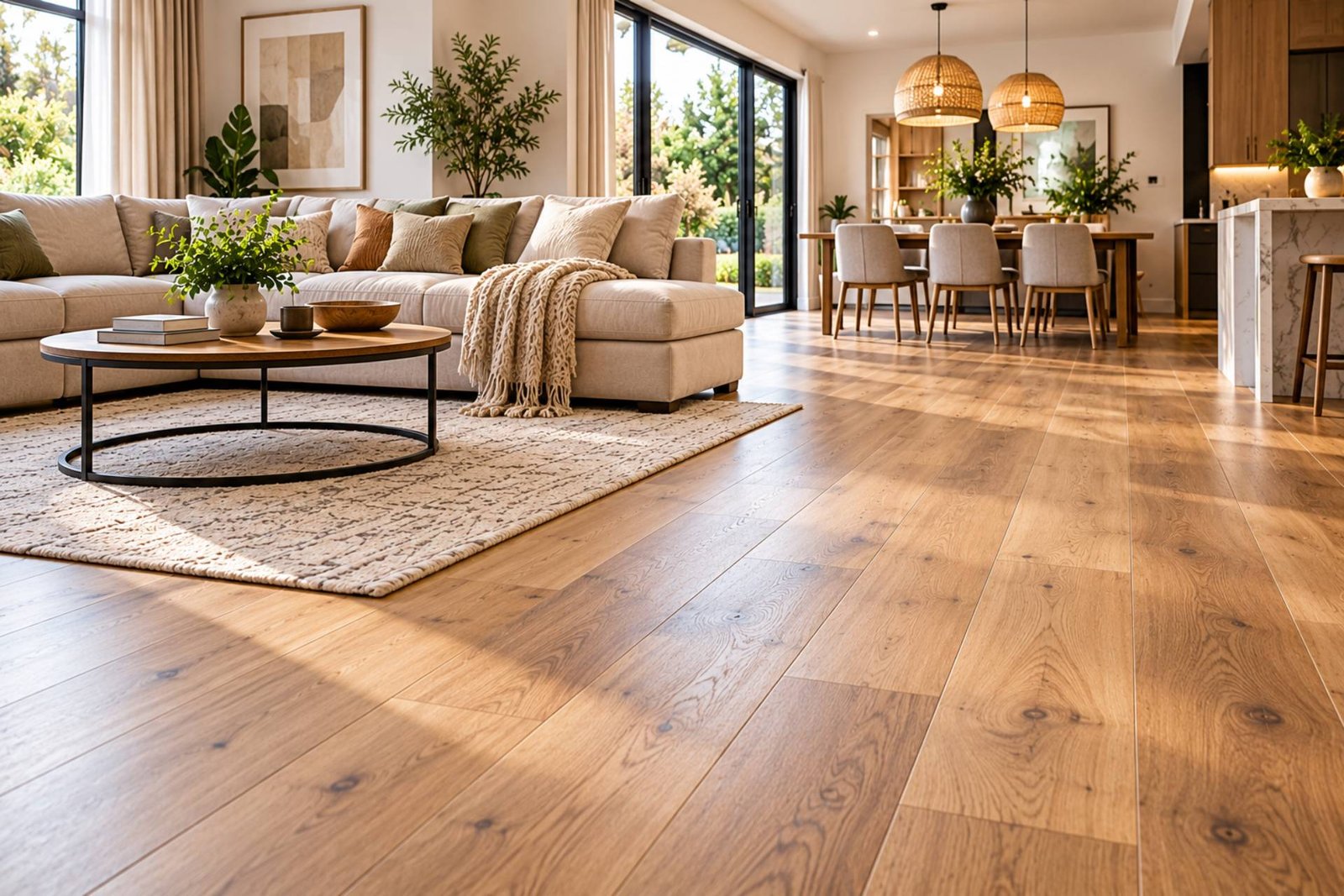
Wide floorboards have become a strong choice for modern residential interiors because they create fewer visible joins across a room.
This can give the floor a calmer, more continuous appearance. Wide boards are particularly effective in open-plan living areas where the flooring needs to connect several zones without making the space look busy.
Light oak, natural timber, soft beige, and muted brown finishes work especially well with this style.
The direction of the planks also matters. Laying them along the longest dimension of a room can emphasize its length, while running them toward a main window can help guide the eye toward natural light.
Engineered Wood Combines Style and Practicality
Natural timber has lasting visual appeal, but solid wood is not the only way to achieve that look. Modern engineered wood flooring uses a real wood surface over a layered core, giving homeowners a wide choice of finishes, plank sizes, textures, and patterns.
It can suit contemporary living rooms, bedrooms, dining spaces, and open-plan interiors where a genuine timber appearance is important.
Popular finishes include:
- Natural oak
- Pale blonde timber
- Warm honey tones
- Smoked wood
- Matte finishes
- Brushed textures
- Wide planks
The best option depends on the room, installation conditions, maintenance expectations, and the amount of daily traffic.
Herringbone Adds Structure and Character
Herringbone flooring is one of the easiest ways to make a floor an intentional part of the interior design.
Instead of placing boards in straight parallel lines, shorter pieces are arranged in a repeated angled pattern. This creates movement and visual detail without requiring bright colors or elaborate decoration.
Herringbone works particularly well in:
- Entrance halls
- Dining rooms
- Living rooms
- Kitchens
- Open-plan spaces
Natural oak herringbone can feel elegant without being overly formal. Darker finishes create a stronger statement, while pale timber gives the traditional pattern a more contemporary appearance.
Because the layout itself attracts attention, surrounding furniture and decoration can often remain relatively simple.
Chevron Flooring Creates a Sharper Geometric Effect
Chevron is sometimes confused with herringbone, but the finished appearance is different.
Chevron boards meet at clean points, creating continuous V-shaped lines across the floor. The effect is more geometric and directional.
It can be particularly effective in modern homes where strong lines are already present through furniture, cabinetry, windows, or architectural features.
Chevron flooring works best when there is enough visible floor area for the pattern to be appreciated. In very small or heavily furnished rooms, much of the effect may be hidden.
Large-Format Tiles Make Spaces Feel More Open
Large tiles are a strong option for modern kitchens, bathrooms, hallways, and open-plan living spaces.
Because there are fewer grout lines, the floor appears more continuous. This can create a cleaner visual effect and may help compact rooms feel less interrupted.
Popular finishes include:
- Limestone effects
- Marble effects
- Concrete effects
- Warm beige stone
- Soft gray
- Charcoal
- Travertine-inspired designs
Large-format porcelain is particularly useful when homeowners want the appearance of natural stone with a more predictable finish.
Accurate installation is important because uneven surfaces and poorly aligned joints become easier to notice when the tiles are large.
Stone-Effect Flooring Brings Natural Texture Indoors
Natural stone has a distinctive appearance, but homeowners can also achieve a similar visual effect with porcelain and other manufactured materials.
Stone-inspired flooring works well with neutral furniture, wood cabinetry, metal accents, and large windows.
Warm limestone effects can create a relaxed atmosphere, while darker slate-style floors introduce stronger contrast. Marble-inspired finishes can make bathrooms and entrance areas feel more refined.
The key is restraint. A heavily patterned stone effect can dominate a small room, while a softer design gives furniture and architectural details more room to stand out.
Concrete-Effect Floors Suit Minimalist Homes
Concrete has become closely associated with modern residential design because of its simple, understated appearance.
Actual polished concrete may suit certain projects, while tiles and other materials can reproduce a similar look without requiring the same construction method.
Concrete-style floors pair naturally with:
- White walls
- Timber furniture
- Black metal details
- Neutral upholstery
- Large windows
- Simple cabinetry
The result can feel clean and architectural without looking cold when warmer materials are introduced elsewhere in the room.
Wooden furniture, textured rugs, curtains, cushions, and plants can soften the overall effect.
Modern Vinyl Offers More Design Flexibility
Vinyl flooring has changed significantly from the basic sheet designs many homeowners remember.
Modern options can reproduce the appearance of timber, stone, tile, and other materials. Plank and tile formats make it possible to create more realistic layouts.
Vinyl can be particularly useful in spaces where easy cleaning and moisture resistance are important.
Kitchens, utility rooms, entrance areas, and family spaces may benefit from these practical qualities.
When choosing vinyl, compare more than the printed design. Surface texture, thickness, wear layer, edge detailing, installation type, and manufacturer recommendations all affect the finished result.
Consider Rubber Flooring for Functional Residential Spaces
Not every room needs a traditional wood or stone appearance.
Modern rubber flooring can be worth considering in practical areas such as home gyms, playrooms, hobby rooms, workshops, or other spaces where grip, comfort, and durability matter.
It is available in a broader range of finishes than many homeowners expect, allowing functional rooms to feel more considered rather than purely utilitarian.
The material may not suit every living area, but choosing flooring according to how a room is used is an important part of good residential design.
Warm Neutral Floors Are Easy to Coordinate
Warm neutrals remain popular because they work with a wide range of furniture and wall colors.
Beige, light oak, greige, soft brown, and warm stone tones provide enough character to make a room inviting without restricting future decorating choices.
This matters because flooring is normally replaced far less often than paint, cushions, curtains, or furniture.
A neutral floor gives homeowners more freedom to change the room later.
Warm flooring also works particularly well with natural materials such as linen, wool, timber, rattan, leather, and stone.
Dark Floors Create Strong Contrast
Dark flooring can make an interior feel sophisticated and grounded.
Walnut tones, deep brown timber, charcoal stone, and nearly black tiles can create striking contrast against pale walls and furniture.
However, darker floors work best when the room has sufficient light.
In smaller rooms with limited natural light, using dark flooring on every surface can make the space feel more enclosed. Balance is therefore important.
Pair darker floors with:
- Light walls
- Pale upholstery
- Warm lighting
- Reflective surfaces
- Natural textiles
- Simple furniture
This allows the floor to provide depth without overwhelming the room.
Pale Floors Can Make Compact Rooms Feel Brighter
Light floors reflect more available light and generally create a softer visual effect.
Pale oak, washed timber, cream stone, light gray, and warm white finishes are especially useful in apartments, narrow rooms, hallways, and interiors with smaller windows.
Using similar flooring through adjoining spaces can also reduce visual breaks.
When a hallway, living room, and dining area share one continuous tone, the spaces may feel more connected.
That does not mean every room requires identical flooring. Similar colors and undertones can still create continuity when different materials are needed.
Use Flooring to Define Open-Plan Areas
Modern homes often combine kitchens, dining spaces, and living areas into one larger room.
There are two main ways to approach the floor.
The first is to use one material throughout the entire space. This produces continuity and can make the room feel larger.
The second is to change materials strategically. For example, tile might be used around the kitchen while timber continues through the dining and seating areas.
If materials change, the transition should look intentional.
Matching undertones, choosing clean transition lines, and aligning flooring with architectural boundaries can prevent the room from feeling divided randomly.
Add Rugs Without Hiding the Floor
A well-designed floor does not mean rugs should be avoided.
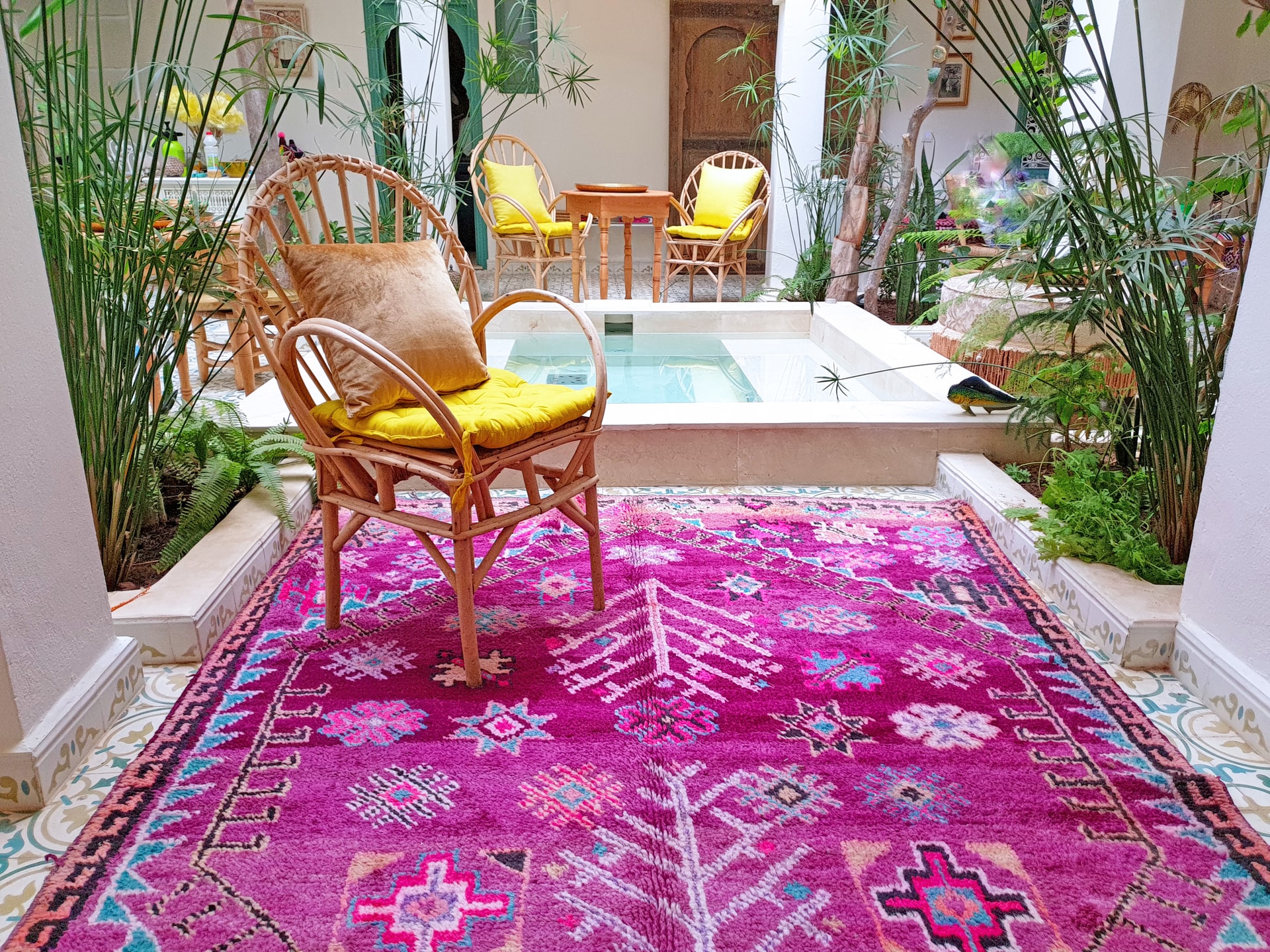
Rugs can add softness, warmth, color, and acoustic comfort while helping define different areas within larger rooms.
In a living room, a large rug can visually connect the sofa, chairs, and coffee table. In a bedroom, a rug beneath the bed creates a softer surface while leaving the surrounding flooring visible.
Scale is important.
Very small rugs can make furniture look disconnected. Larger rugs usually create a more balanced and intentional appearance.
Choose a rug that complements the floor rather than covering the features that made you select it in the first place.
Consider Texture, Not Just Color
Flooring texture influences how a room feels almost as much as color.
Smooth finishes tend to look more polished and minimal. Brushed timber, textured tile, stone effects, and lightly distressed surfaces create more visual depth.
Texture can also affect practicality.
Highly polished surfaces may show marks more easily, while subtle variation can help disguise normal everyday wear.
When examining samples, look at them from several angles. Natural and artificial light can change the way texture and surface sheen appear.
Think About Everyday Maintenance
A stylish floor should still fit the household’s daily routine.
Before making a final decision, find out how the surface should be cleaned and whether it requires sealing, refinishing, polishing, or other periodic care.
Homes with pets, children, or frequent visitors may benefit from surfaces that hide minor marks and can be cleaned quickly.
Entrances and kitchens usually need more practical flooring than low-traffic bedrooms.
Choosing according to real use rather than appearance alone can prevent frustration later.
Frequently Asked Questions
What flooring looks most modern?
Wide-plank wood, engineered timber, large-format tile, concrete-effect surfaces, herringbone patterns, and neutral stone finishes can all create a modern appearance. The best choice depends on the home’s architecture and interior style.
What floor color works best in modern interiors?
Natural oak, warm beige, pale timber, soft gray, greige, and charcoal are commonly used because they coordinate easily with contemporary furniture and neutral walls.
Is herringbone flooring suitable for small rooms?
Yes. Herringbone can add character to smaller spaces, although the scale of the pattern should suit the room. Lighter colors may help keep the overall effect from becoming too busy.
Should all rooms have the same flooring?
Not necessarily. Continuous flooring can create flow, especially in open-plan areas, but different rooms have different practical needs. Coordinating colors and undertones can keep several flooring materials visually connected.
Are dark floors suitable for small homes?
They can be, particularly when there is good natural light and pale surrounding decor. In darker spaces, lighter flooring may create a brighter and more open appearance.
Conclusion
Modern floor design is about much more than choosing a fashionable material. The floor should complement the architecture, furniture, lighting, room size, and everyday needs of the household.
Wide timber planks can create a calm contemporary base, patterned floors add character, large tiles produce a cleaner visual flow, and modern manufactured materials provide practical alternatives for busy rooms. Color and texture also deserve careful thought because they influence how spacious, warm, bright, or dramatic an interior feels.
The strongest residential interiors usually begin with flooring that looks good without demanding constant attention. By considering appearance, durability, maintenance, room use, and long-term flexibility together, homeowners can create floors that continue to support the style of their home well beyond the latest design trend.