Most families think of electrical safety in terms of obvious hazards, such as exposed wires, overloaded outlets, or children playing near electrical panels. While these are important concerns, some of the most serious risks can begin with small changes that are easy to overlook. A warm outlet, flickering light, unusual smell, or frequently tripping breaker may be an early warning that something is wrong.
Understanding common electrical risks can help homeowners respond before a minor issue becomes a fire hazard, equipment failure, or dangerous shock. Knowing the burnt outlet repair warning signs is one useful step, but electrical safety involves much more than checking outlets.
Warm or Discolored Outlets
Electrical outlets should not normally feel hot to the touch. If an outlet or its surrounding wall plate becomes unusually warm, it may indicate excessive electrical resistance, a loose connection, damaged wiring, or a circuit carrying more load than it should.
Discoloration deserves particular attention. Brown, black, or yellow marks around an outlet can suggest heat damage. A burnt smell or visible scorching is an even stronger reason to stop using the outlet.
Do not simply replace the cover plate and continue using it. The underlying electrical connection needs to be assessed by a qualified professional.
Flickering or Dimming Lights
A light that flickers occasionally may seem harmless, particularly if the bulb is old or loose. However, persistent flickering or unexplained dimming can sometimes point to a larger electrical problem.
Loose connections, overloaded circuits, faulty fixtures, or wiring problems can all contribute to unstable lighting. If several lights throughout the home flicker at the same time, the issue may involve the electrical system rather than a single bulb.
Pay attention to when the problem occurs. If lights dim whenever a major appliance starts, the circuit may be experiencing a significant load. Repeated problems should not be ignored.
Frequently Tripping Breakers
Circuit breakers are designed to interrupt electrical flow when a circuit becomes overloaded or develops a fault. Occasional trips can happen when several high-powered appliances operate on the same circuit.
Frequent trips, however, are worth investigating.
If a breaker keeps shutting off after being reset, there may be an overloaded circuit, short circuit, faulty appliance, or another electrical issue. Repeatedly resetting the breaker without identifying the cause can allow the underlying problem to continue.
Instead of treating the breaker as an inconvenience, consider it a safety device doing its job.
Overloaded Power Strips and Extension Cords
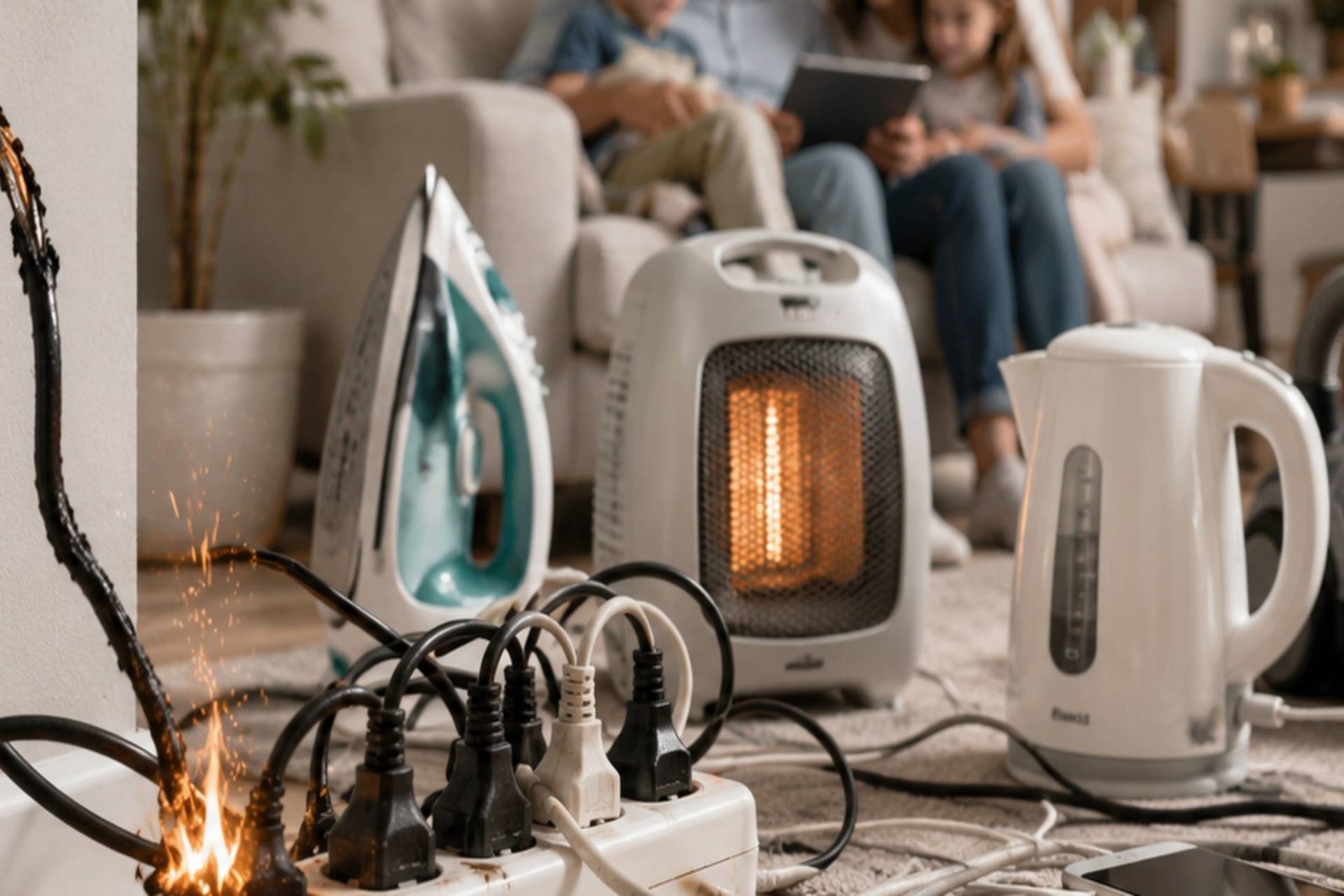
Power strips and extension cords can be useful for temporary setups, but they are not a substitute for properly installed electrical outlets. Connecting too many devices to one strip can create excessive demand and increase the risk of overheating.
High-powered appliances such as space heaters, microwaves, hair dryers, and portable air conditioners require particular care. Some should be plugged directly into an appropriate wall outlet rather than a power strip or extension cord.
Cords should also be inspected regularly. Fraying, cracked insulation, exposed wires, melted sections, or loose plugs are reasons to stop using the damaged equipment.
Outlets Near Water
Water and electricity are a dangerous combination, which is why outlets in kitchens, bathrooms, laundry areas, garages, and outdoor spaces require appropriate protection.
Ground-fault circuit interrupter, or GFCI, outlets are designed to shut off power when they detect an imbalance in electrical current. They are especially important in areas where electricity may come into contact with moisture.
Homeowners should know where their GFCI outlets are located and test them periodically according to the manufacturer’s instructions. If a GFCI will not reset or appears damaged, it should be inspected rather than bypassed.
Unusual Electrical Odors
A strange smell coming from an outlet, switch, appliance, or electrical panel should never be dismissed. A sharp burning or melted-plastic odor may indicate overheating components or damaged insulation.
If the smell is accompanied by smoke, sparks, visible scorching, or heat, turn off the affected equipment if it is safe to do so and seek professional assistance. Do not investigate inside electrical boxes or panels yourself unless you are properly qualified.
Electrical problems can develop behind walls, making them difficult to identify through visual inspection alone.
Buzzing, Crackling, or Humming Sounds
Electricity should not normally produce noticeable buzzing or crackling from household switches and outlets. A faint sound from certain devices can have a harmless explanation, but persistent or unusual noises deserve attention.
Crackling may indicate arcing, while buzzing can sometimes result from loose connections or components under stress. Because electrical arcing can generate significant heat, unusual sounds should not be treated as background noise.
If a switch or outlet makes a noise when you turn it on or plug something in, discontinue use until the source has been properly evaluated.
Damaged or Aging Wiring
Older homes can contain outdated wiring systems that may not meet the electrical demands of modern households. Even newer homes can develop wiring problems because of renovations, accidental damage, pests, moisture, or improper modifications.
Warning signs can include frequently tripped breakers, flickering lights, burning odors, buzzing outlets, and discolored switches. Damaged cords and exposed wiring are also immediate concerns.
DIY electrical modifications can create additional risks when connections are made incorrectly or circuits are not properly protected. Electrical work that involves household wiring is best handled by a qualified electrician who understands local safety requirements.
Appliances Can Become Electrical Hazards
An appliance does not have to look broken to pose an electrical risk. Internal faults, damaged cords, moisture, overheating, and worn components can all create problems.
Large appliances deserve special attention because they can draw substantial amounts of power. Refrigerators, dryers, ovens, air conditioners, and other high-demand equipment should be connected to suitable circuits.
If an appliance repeatedly trips a breaker, produces an unusual smell, shocks you when touched, or becomes excessively hot, stop using it until the problem has been evaluated.
Conclusion
Electrical safety often comes down to noticing changes before they become emergencies. A warm outlet, flickering light, damaged cord, unusual sound, or repeatedly tripped breaker may seem like a minor inconvenience, but these signs can reveal problems that require attention.
Families can reduce unnecessary risk by avoiding overloaded outlets, keeping electrical equipment away from water, replacing damaged cords, using GFCI protection where appropriate, and arranging professional inspections when something seems unusual.
Most importantly, never assume that an electrical problem will resolve itself. When electricity behaves differently from normal, treat the change as a warning rather than something to ignore. A cautious response today can help protect your home, your appliances, and everyone living in it.